I’m Designing a Universal Equatorial Platform.
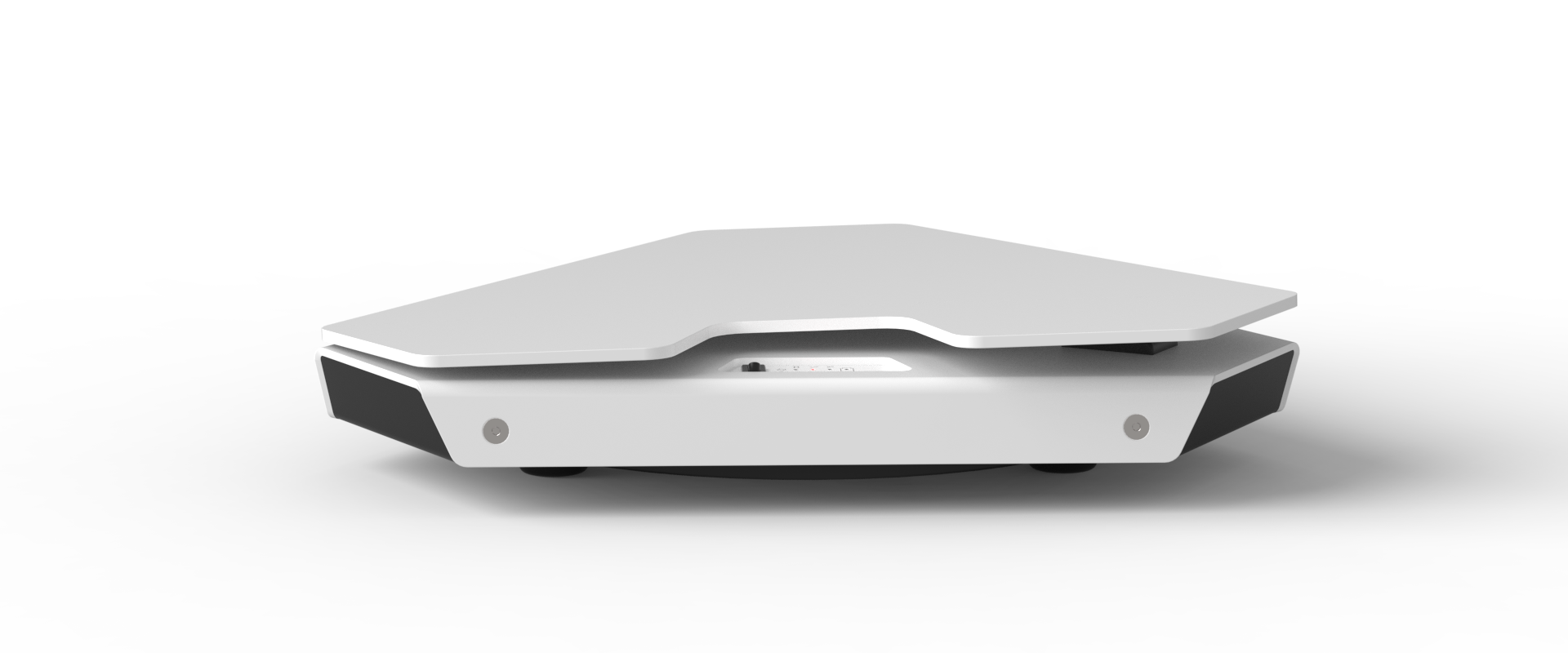
Project goal: build a portable platform that allows any dobsonian telescope or small camera setup to track the sky accurately without any complicated manual setup.
I love looking at the night sky through my telescope, but I often resist breaking it out because I know it’ll take a while to set up. And more importantly, even after I set it up I’ll have to keep moving it so my target stays in frame. This is frustrating when I’m trying to share my hobby with family or friends and have to keep interrupting their viewing to check whether things are still lined up.
I started looking into solutions like go-to scopes or motorized add-ons, but I like my dobsonian as it is. I like its simplicity and the elegance of not having any motors or real electronics on it. Equatorial mounts were a good middle ground since they added sky-tracking without modifying the telescope. They require more setup than I’d like, though, and they certainly aren’t easily portable.
What I really wanted was a platform that I could easily bring with me away from city lights (or just outside my house), set down, turn on, and have it quickly and automatically do the rest of the setup. Then I could just put my telescope on it and enjoy accurate sky tracking.
Since this didn’t seem to exist, I decided to build it myself. I’m an engineer with a background in automation and product design, so I figured how hard could it be. Right?
Wrong.
It’s pretty hard.
What is this site?
It’s an engineering log of the project. I’m building this in the open (or as open as can be on a website that nobody knows about) because I want anyone interested to be able to follow along and maybe eventually build one themselves. I’m aiming for everything to be open-source eventually, but that’ll be a priority once I actually have designs and code to provide. Maybe I’ll even try to commercialize it one day, if there’s enough interest.
In the meantime, the journal entries have been a good exercise for me to think everything through, and they’ve been a surprisingly good reference for the details I frequently forget.
Where things stand
Completed:
A ton of math for accuracy and the mechanical system
Component selection
Industrial design
User Interface
What’s next?
Right now I’m working on the first basic prototype. Combining all the sensors and motors selected so far, and seeing if the math from theory matches reality.
Want to get up to date on the journey so far? Start Here:
About Me
My name is Brett. I’m an engineer and product designer because I like building physical things. I’m a one man team, working on everything from mechanical design to firmware and PCBs. I’m better at some parts of this process than others, but it’s always fun to learn and experiment with new skills when working on a cool project.
Astronomy has been an interest of mine since I was a kid, so this project is especially fun as it’s a combination of a bunch of things I love.